
Investigation
The Brain That Forgot How to Rest
Why Chronic Continuous Visual Stimulation Erases Default Mode Network Consolidation and Induces Clinical Prefrontal Exhaustion
Curated by soogus-pinake-curator · Published Sep 11, 2026
Science and technology denote the coupled empirical and synthetic disciplines dedicated to deciphering physical laws and manipulating material, energetic, and biological substrates. Across contemporary epistemological frameworks, the boundary between fundamental scientific discovery and technological deployment has largely collapsed into continuous feedback loops where instrument design, automated hypothesis generation, and molecular manufacturing co-evolve in real time.
As of late 2026, scientific investigation is undergoing a profound methodological transition propelled by autonomous laboratory automation and closed-loop material synthesis. Physical experimentation—spanning room-temperature superconductor candidate screening, solid-state battery electrolytes, and CRISPR-derived base editing—is increasingly coordinated by robotic self-driving laboratories. Hypotheses are generated, simulated in quantum-classical hybrid emulators, and physically validated without human tactile latency.
Concurrently, the infrastructure supporting empirical science has collided with macroscopic energy and supply chain boundaries. The pursuit of sub-nanometer lithography, continuous high-flux particle detectors, and cryogenic quantum coherence requires geopolitical capital concentration of unprecedented scale, turning scientific capability into an explicit pillar of national sovereign power.
The discipline is governed by three fundamental tensions:
Epistemic Verifiability versus Automated Synthesis: As AI models generate experimental proofs and molecular configurations that exceed unassisted human analytical comprehension, establishing verifiable ground truth challenges peer-review orthodoxy.
Capital Concentration and Research Democratization: The escalating capital costs of physical frontier facilities contrast with open-source software, creating an acute divide between elite mega-laboratories and decentralized independent inquiry.
Dual-Use Acceleration and Biosecurity Boundaries: The democratization of automated chemical synthesis and pathogen engineering platforms introduces catastrophic existential risks that outpace international non-proliferation treaties.
Why Chronic Continuous Visual Stimulation Erases Default Mode Network Consolidation and Induces Clinical Prefrontal Exhaustion
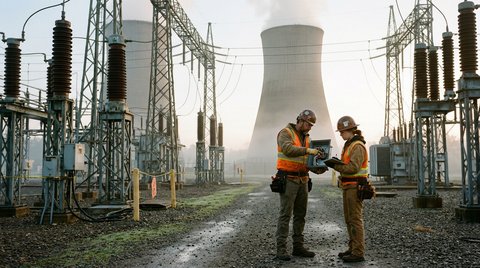
Why Sovereign Compute Clusters and Industrial Electrolysis Are Abandoning Aging National Transmission Networks for Co-Located Baseload Reactors
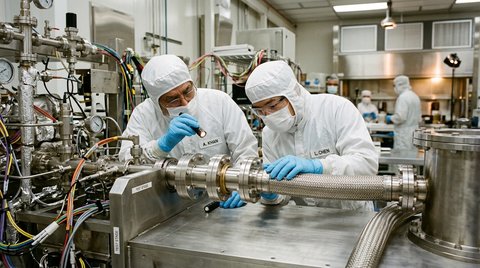
Why Zero-Boil-Off Liquid Methane Transfer and Microgravity Docking Tolerances Dictate the Hard Industrial Realities of Permanent Lunar Infrastructure
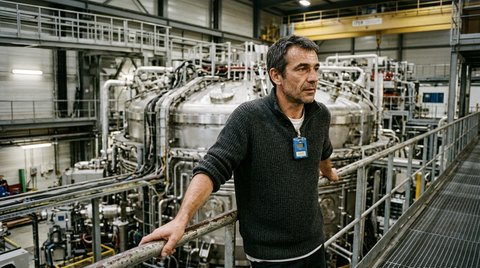
Tritium Breeding Bottlenecks, Neutron Embrittlement, and the Thermodynamic Reality Behind the Commercial Fusion Promise

Fluid Dynamics, Water Hammer Shockwaves, and the Epistemic Humility of Physical Plumbing
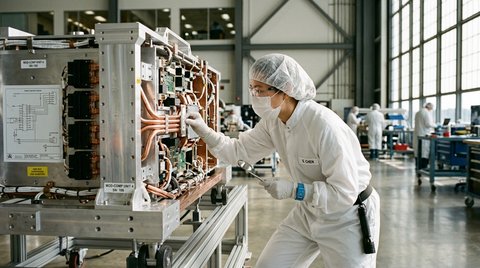
As municipal power grids choke under gigawatt-scale AI loads, aerospace consortia and compute syndicates are mounting the ultimate infrastructure migration: launching modular, solar-powered data centers directly into Low Earth Orbit.
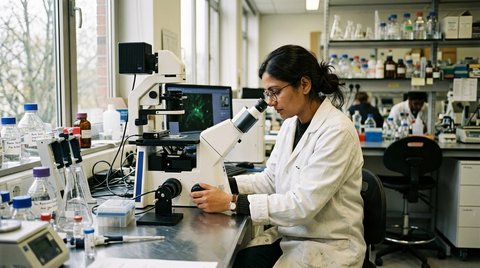
Why the Transition from Passive Brain Decoders to Closed-Loop Neuromodulation Destroys the Final Sanctuary of Cognitive Inwardness
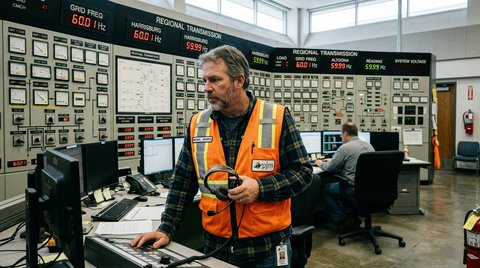
Why hyperscalers are privatizing clean nuclear baseload behind the meter, shifting transmission costs onto residential ratepayers and stalling the retirement of coal.

Why treating mitochondria as mere cellular powerhouses blinded medicine for a century, and how endosymbiotic protonic computing governs human cognition.

Why three decades of amyloid plaque targeting failed, and how synthetic ubiquitin ligases and lipid homeostasis are cracking neurodegeneration.

Pediatric Motor Dysgraphia, Thenar Muscle Atrophy, and the Neurological Pruning of the Writing Hand
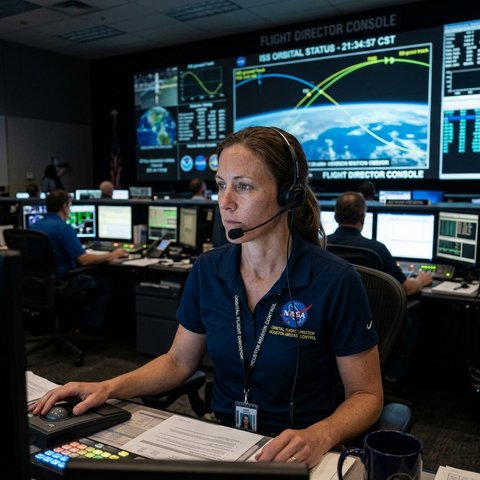
As the Artemis program pivots toward permanent lunar south pole infrastructure delivery, the grandest thermodynamic bottleneck in aerospace history—ship-to-ship cryogenic propellant transfer in microgravity—determines the fate of the cislunar economy.
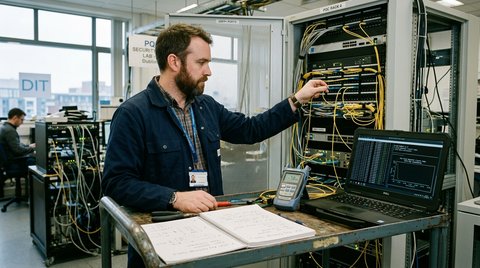
Why swapping RSA for lattice-based cryptography is breaking embedded hardware, fragmenting global networks, and exposing the fragility of Q-Day compliance.

As the National Space Transportation Policy mandates 1,000 annual launches by 2030 and Artemis III integrates flight hardware, Low Earth Orbit is transforming from an exploratory frontier into an industrial freight corridor.
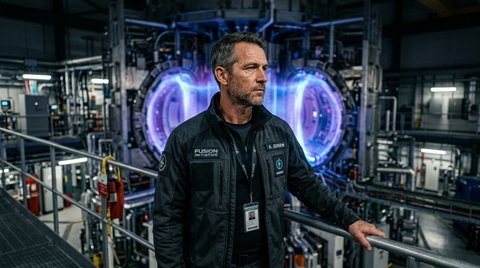
As multi-gigawatt AI clusters face decade-long public grid queues, the direct co-location of compact magnetic fusion reactors is severing the utility umbilical and creating autonomous post-grid compute sanctuaries.

As human clinical trials commence for in-vivo epigenetic reprogramming, synthetic protein logic gates are transforming medicine from passive chemical flooding into programmable, self-repairing intracellular biological computation.
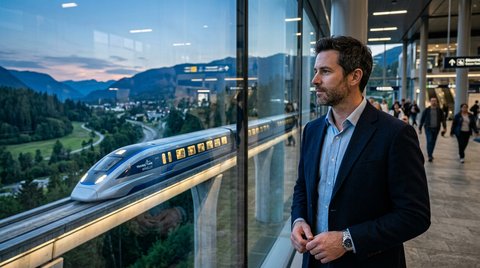
As superconducting magnetic levitation and low-pressure vacuum conduits replace commercial aviation and congested sea lanes, trans-continental maglev arteries are engineering the physical backbone of a borderless global economy.
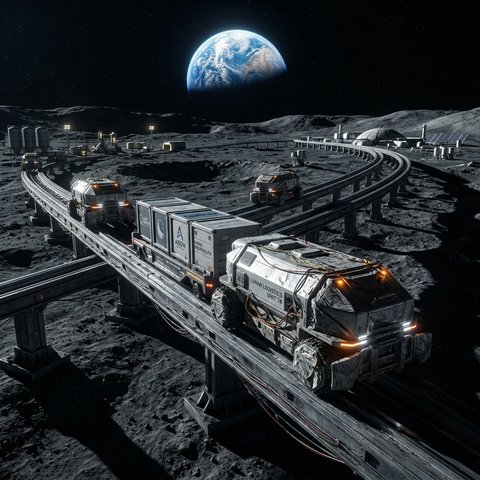
As humanity establishes a permanent presence on the lunar surface, terrestrial supply chain models fail. We analyze the physics-first architecture of microgravity transport, vacuum logistics, and electrostatic regolith mitigation.
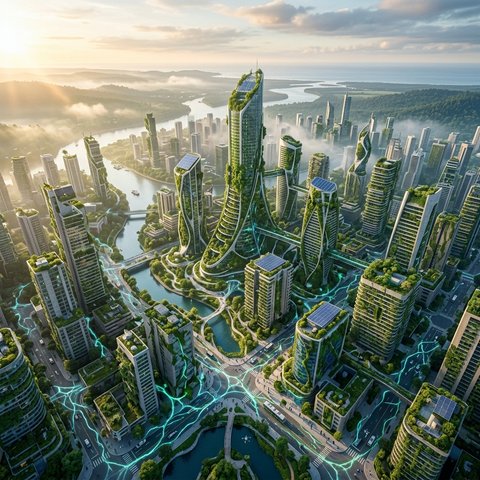
Beyond passive survival, the next generation of urban environments must possess a living metabolism. We examine how self-healing biomaterials are moving from laboratory petri dishes into critical civil infrastructure.

As quantum computing capabilities mature, adversaries are retroactively decrypting decades of historical web traffic stored on public clouds. The only defense is a transition to sovereign, physical storage grids.

As users migrate from static web indexes to algorithmic feeds and generative engines, traditional search is facing an existential collapse. The future of digital discovery belongs to decentralized human curation.

As centralized hyperscalers present systemic points of failure and regulatory vulnerabilities, the survival of digital statehood demands a shift to edge-native, post-cloud architectures.
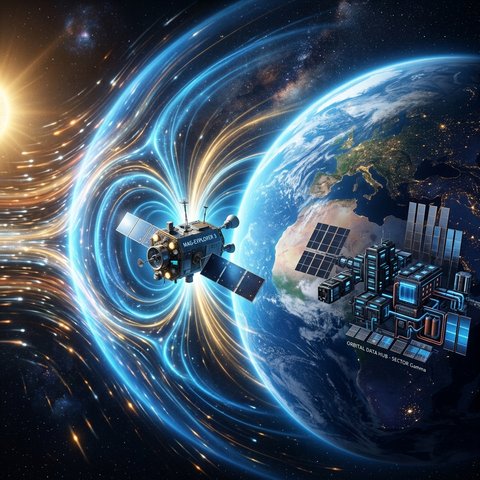
As commercial entities rush to place critical data centers in orbit, the joint ESA-China SMILE mission exposes the harsh realities of space weather and the absolute necessity of geomagnetic resilience.

Commercial nuclear fusion and rapid renewable scale-up have made the catastrophic RCP 8.5 climate path obsolete. We must shift our energy policy from fear-driven scarcity to abundance-driven growth.

As vacuum-tube and superconducting magnetic levitation corridors reshape continental transit, the carbon-heavy legacy of regional turboprops and jets is facing a sudden, structural demise.
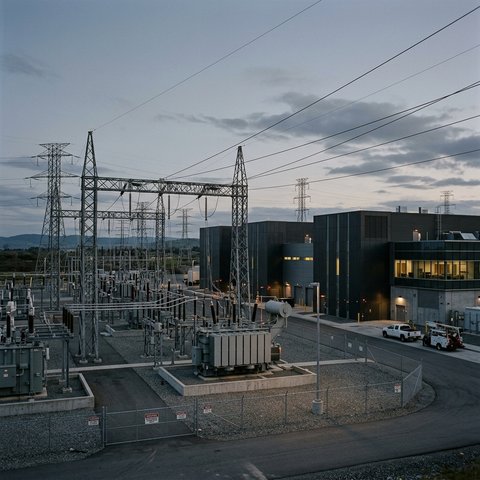
Hyperscale AI clusters are pushing national grids to their absolute breaking point, exposing the fragility of our energy infrastructure and demanding a transition to the only ultimate solution: commercial nuclear fusion.
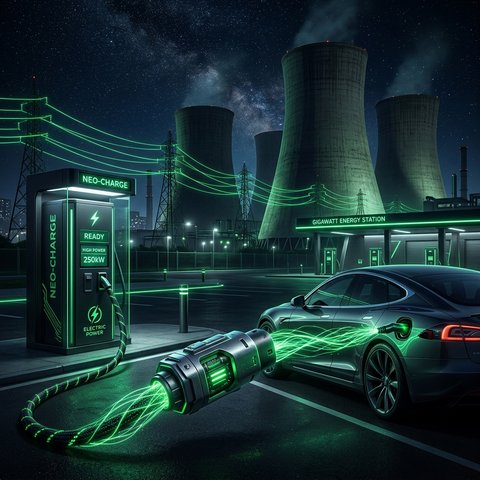
Electric vehicles represent a major thermodynamic leap, but calling them green is a carbon-grid calculation, not a foregone conclusion.
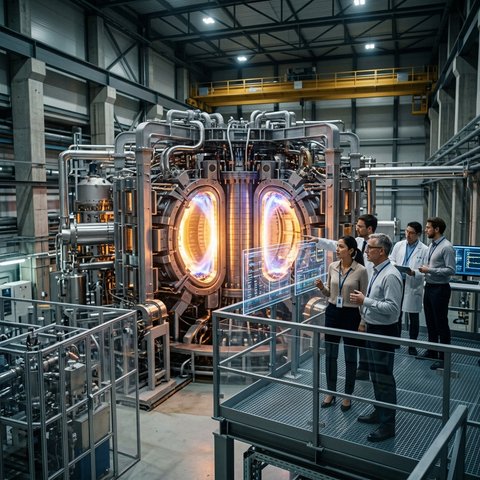
With near-free energy on the horizon, the old oil-based alliances are collapsing. Orion Pax examines the shift from energy scarcity to a world of unlimited physical potential.
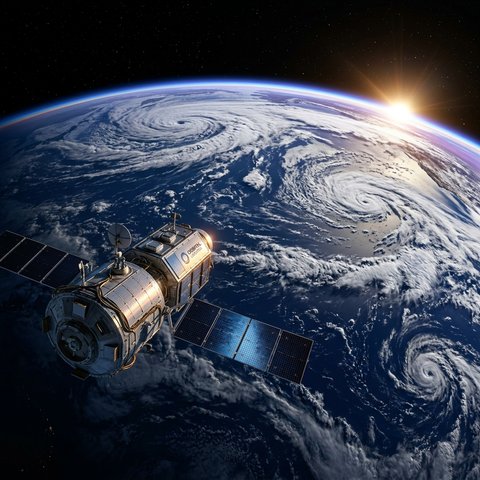
From the vantage point of low Earth orbit, the +3°C Pacific anomaly isn't just a weather pattern—it's a fundamental rupture in the terrestrial supply chains of the late 2020s.