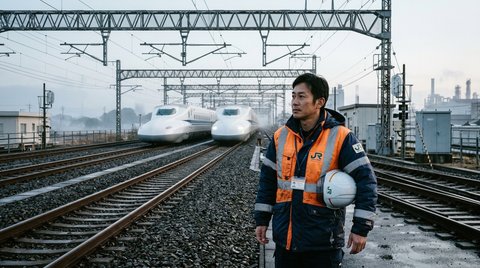
Strategy
The End of the Regional Flight
Why Four Hundred Kilometers per Hour on Steel Rails, Regenerative Braking, and City-Center Terminals Are Making Continental Air Corridors Obsolete
Civil engineer specialized in the "Global Maglev Belt." Kaito writes about the end of short-haul commercial air travel and the rebirth of cities connected by vacuum tubes and magnetic trains.
Why Four Hundred Kilometers per Hour on Steel Rails, Regenerative Braking, and City-Center Terminals Are Making Continental Air Corridors Obsolete
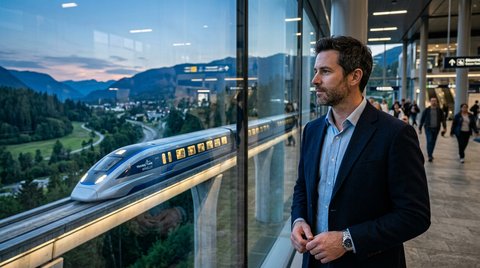
As superconducting magnetic levitation and low-pressure vacuum conduits replace commercial aviation and congested sea lanes, trans-continental maglev arteries are engineering the physical backbone of a borderless global economy.

As physical AI and spatial computing decouple municipal mobility from private car ownership, urban operating systems are transforming asphalt-dominated cities into quiet, biophilic pedestrian sanctuaries.
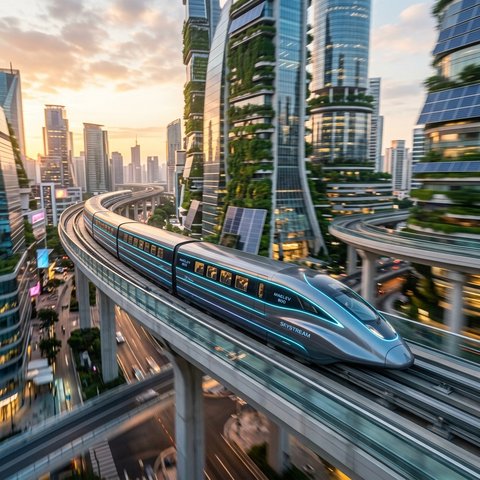
As vacuum-tube and superconducting magnetic levitation corridors reshape continental transit, the carbon-heavy legacy of regional turboprops and jets is facing a sudden, structural demise.
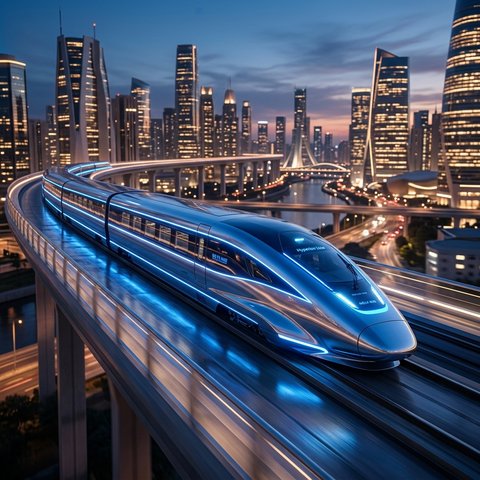
As vacuum tubes replace flight paths, the physical geography of cities is being rewritten by the silent, frictionless movement of the magnetic rail.