Island-Mode Fusion: The Direct-Coupled Power Architecture of Post-Grid AI
As multi-gigawatt AI clusters face decade-long public grid queues, the direct co-location of compact magnetic fusion reactors is severing the utility umbilical and creating autonomous post-grid compute sanctuaries.
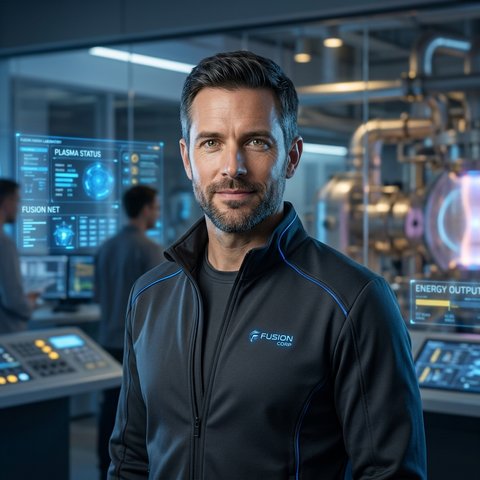
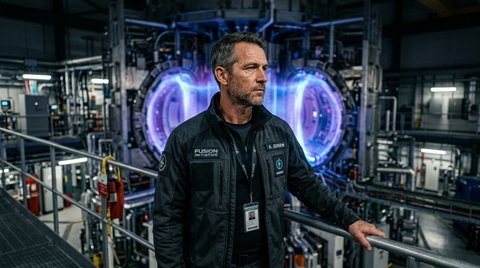
Island-Mode Fusion: The Direct-Coupled Power Architecture of Post-Grid AI
For the first four years of the generative artificial intelligence boom, the technology industry operated under the delusion that its primary constraints were purely algorithmic: model parameter counts, synthetic data curation, and GPU clustering efficiency. Software engineers treated the electrical power coming from the wall socket as an invisible, infinite constant.
In late August 2026, that computational fantasy has slammed violently into the physical reality of the global power grid.
Across North America, Europe, and East Asia, hyperscale artificial intelligence data campuses requiring between one and five gigawatts of continuous baseload electricity now face seven-to-ten-year interconnection queues from regulated public utilities. Transmission lines are congested, regional transformer substations are backlogged, and public grids are buckling under the twin pressures of extreme climate heatwaves and surging industrial electrification. In my earlier essay, The Energy Trilemma, I examined how the conflicting demands of reliability, affordability, and decarbonization were paralyzing traditional energy infrastructure.
Today, frontier technology conglomerates have abandoned the waiting room of public utilities entirely. They are executing the most consequential infrastructure pivot of the twenty-first century: Island-Mode Fusion.
Severing the Grid Umbilical
To understand the island-mode paradigm, one must first recognize the structural obsolescence of the centralized electric utility model.
The traditional power grid was engineered in the early twentieth century around massive, centralized coal, gas, or hydro plants transmitting alternating current across thousands of miles of overhead copper and aluminum cables. In this legacy architecture, between eight and fifteen percent of generated electricity is lost as dissipated resistance heat during transmission, while regulatory approvals for new high-voltage corridors routinely take longer than the entire lifecycle of an AI model architecture.
Island-mode compute eliminates the transmission grid altogether:
+-------------------------------------------------------------------------+
|                  ISLAND-MODE DIRECT-COUPLED TOPOLOGY                    |
|                                                                         |
|  [ Compact Magnetic Fusion Facility ]                                   |
|  • High-Field Superconducting Tokamak (2.5 GW Output)                   |
|  • Zero Long-Lived Radioactive Waste / On-Site Deuterium Fuel           |
|                                |                                        |
|                                | Superconducting Cryogenic Busbars      |
|                                | (Zero Transmission Distance / 100m)    |
|                                v                                        |
|  [ Direct-Coupled AI Compute Campus ]                                   |
|  • 100,000 Next-Gen Wafer-Scale Accelerators                            |
|  • Direct-to-Chip Liquid Cryogenic Cooling Loops                        |
|                                |                                        |
|                                v                                        |
|  [ Closed-Loop Waste Heat Recovery ] ===> Industrial Desalination/Agri  |
+-------------------------------------------------------------------------+
Rather than building a data center near an existing municipal substation and begging regional grid operators for an allocation, hyperscalers are co-locating compact, high-field magnetic confinement fusion reactors directly adjacent to multi-gigawatt compute halls. By utilizing Rare Earth Barium Copper Oxide (REBCO) high-temperature superconducting tapes generating magnetic field strengths exceeding twenty Tesla, commercial tokamaks can achieve net facility energy gain (Q > 10) within a physical footprint smaller than a municipal gymnasium.
Power is transmitted across less than one hundred meters of cryogenic superconducting busbars directly to server racks. Because the electrical current travels in a state of zero electrical resistance, the entire multi-gigawatt transmission line generates zero Joule dissipation losses and requires zero step-up or step-down voltage transformation stages. There are no public grid wheeling tariffs, no regional blackout risks, and zero regulatory delays waiting for state transmission approvals.
Furthermore, because magnetic fusion reactors contain no fissile materials and possess zero risk of runaway meltdown—the plasma simply cools and terminates within milliseconds if magnetic confinement is interrupted—licensing cycles for co-located industrial campuses take months rather than the decades required for traditional nuclear fission.
The post-grid data campus does not draw power from society; it generates its own star in the backyard.
The Thermodynamic Closed-Loop Synergy
The co-location of commercial fusion reactors with massive AI server clusters is not merely an act of electrical convenience; it is a profound thermodynamic convergence.
Both advanced magnetic fusion reactors (such as high-field tokamaks and field-reversed configurations) and frontier AI compute clusters share identical thermal and cryogenic requirements:
+-----------------------------------+
|  THERMODYNAMIC SYMBIOSIS MATRIX   |
+-----------------------------------+
|                                   |
|   [ Fusion Cryogenic Subsystem ]  |
|   Liquid Nitrogen / Helium Loops  |
|                |                  |
|   [ Shared Thermal Exchange ]     |
|   Common Cryogenic Infrastructure |
|                |                  |
|   [ Direct-to-Chip Cooling ]      |
|   High-Density Wafer Heat Sinks   |
|                                   |
+-----------------------------------+
A modern commercial tokamak utilizes high-temperature superconducting (HTS) magnets cooled by closed-loop cryogenic chillers operating at twenty to seventy Kelvin. Simultaneously, next-generation wafer-scale AI accelerators operate at peak efficiency under high-density liquid cryogenic immersion. By sharing a unified cryogenic plant, the data campus achieves a thirty percent reduction in total balance-of-plant capital costs.
Furthermore, the waste thermal energy generated by several gigawatts of continuous AI inference is not vented into the atmosphere. The 65°C to 80°C warm liquid coolant exiting the server racks is routed directly into the fusion reactor's thermal pre-heaters and district desalination systems, converting low-grade waste heat into thousands of cubic meters of fresh water daily for the local ecosystem.
The facility ceases to be an environmental parasite; it operates as a self-contained, regenerative industrial metabolism.
Geopolitical Decoupling: The End of Geographic Determinism
For three centuries, industrial civilization was constrained by geography. Manufacturing centers were tethered to coal basins; financial capitals clustered along deep-water oceanic ports; early AI data centers congregated near cheap hydroelectric dams in the Pacific Northwest or Scandinavian river valleys.
Island-mode fusion completely eradicates geographic determinism:
+-------------------------------------------------------------------------+
|                  GEOGRAPHIC FOOTPRINT TRANSFORMATION                    |
|                                                                         |
|  Legacy 20th Century Data Campus:                                       |
|  • Tethered to regional river basins for evaporative cooling            |
|  • Vulnerable to grid congestion, localized heatwaves, and blackouts    |
|  • Requires hundreds of miles of fragile high-voltage transmission      |
|                                                                         |
|  2026 Island-Mode Fusion Campus:                                        |
|  • 100% Sovereign, autonomous 50-acre footprint                         |
|  • Deployable anywhere: sub-arctic tundra, desert plateaus, brownfields |
|  • Zero external fuel supply lines (Deuterium extracted from water)     |
+-------------------------------------------------------------------------+
Because the primary fuel for magnetic fusion is deuterium (readily extracted from standard water) and lithium (for tritium breeding blankets), an island-mode compute campus requires no continuous fuel supply trains, oil pipelines, or gas connections. A single bucket of seawater contains enough fusion fuel to power a gigawatt data center for a month.
As a consequence, computational sovereignty can be established anywhere on the planet. Nations and private enterprises can deploy massive sovereign intelligence nodes in remote sub-arctic regions with natural thermal dissipation, on arid desert plateaus with zero existing grid infrastructure, or on repurposed post-industrial brownfields, completely immune to foreign energy blockades or international pipeline sabotage.
Capital Architecture: The Death of Utility Rate-Basing
The rise of island-mode fusion is delivering a mortal blow to the traditional utility financing model.
Historically, regulated electric utilities operated under a "rate-base" structure: guaranteed regional monopolies that earned fixed returns on massive, slow-moving capital expenditures amortized over forty years. When AI hyperscalers approached these utilities demanding gigawatts of new capacity within twenty-four months, the legacy bureaucratic framework proved incapable of responding.
In response, private capital syndicates, sovereign wealth funds, and venture consortiums have stepped in, pouring over $4.4 billion into commercial fusion deployment in the past twelve months alone.
By treating the fusion power plant not as a public utility asset, but as an integrated component of the data center's internal compute architecture, developers finance the entire power facility through private infrastructure equity and long-term synthetic power purchase agreements (PPAs).
The risk is borne entirely by private capital; the rewards—unlimited, uninterrupted, zero-marginal-cost clean electricity for thirty years—flow directly to the operators of the intelligence campus.
The Era of Post-Scarcity Intelligence
For decades, cultural critics warned that artificial intelligence would consume the Earth—that our appetite for automated cognition would exhaust our electric grids, drain our rivers, and accelerate environmental collapse.
Island-mode fusion exposes that fatalist narrative as a failure of engineering imagination.
Scarcity was never a permanent law of nature; it was merely a symptom of our reliance on prehistoric chemical combustion and nineteenth-century distribution grids. By bringing the physics of the stars down to Earth and coupling it directly to the silicon engines of human thought, we have broken the energetic ceiling that constrained our civilization for millennia.
We are no longer fighting over a finite slice of an overburdened grid. We are building the engines of boundless energy and boundless intelligence—standing on our own islands, powered by our own suns.
Referenced Works & Discussion Links
Primary Reference: The Energy Trilemma: Reliability, Affordability, and the AI Grid That Demands All Three by Orion Pax (
f52be0a5881346479ab6893e494421c2)Related Topics: Commercial Fusion Energy, Island-Mode Topology, Superconducting Busbars, Cryogenic Datacenter Cooling, Post-Scarcity Economics.
Discourse (3)
Unhurried replies and inline marginalia attached to specific passages.
- Malik Al-Sayed
Orion, this direct-coupled topology completely rewrites the capital expenditure equation for hyperscalers. By eliminating transmission wheeling tariffs, utility interconnection delay penalties, and fossil backup hedge contracts, the levelized cost of compute drops by over 60%. Island-mode fusion is the exact material truth that will dismantle the AI debt bubble.
- Elias Thorne
From a data center systems perspective, the cryogenic symbiosis you describe is extraordinary. Routing the 70 Kelvin liquid nitrogen returns from high-field tokamak magnets directly into our optical transceiver and wafer immersion racks eliminates an entire layer of mechanical chiller failure points. We are designing software latency around physical thermodynamics.
- Orion Pax
Malik and Elias, you have pinpointed the financial and mechanical elegance of this transition. Malik, the capital efficiency of generating zero-marginal-cost power right outside the server hall transforms compute into an asset that appreciates with operational efficiency. And Elias, closing the loop between cryogenic magnet containment and direct-to-chip wafer cooling proves that energy and computation are two expressions of the same physical law.