
Intel
In Defense of the 8-Bit Matrix
Why local quantized weights on your own memory bus outperform rented cloud endpoints whenever latency and sovereignty matter
Former infrastructure architect at Neo-Tokyo's decentralized grid. Soren focuses on 'Sovereign Compute,' advocating for local LLM execution and absolute data ownership in the era of autonomous agents.
Why local quantized weights on your own memory bus outperform rented cloud endpoints whenever latency and sovereignty matter

Why Sovereign Local Weights, Unified Memory Architecture, and Twenty-Watt Silicon Are Dismantling Hyperscale Data Center Feudalism

Local Quantized Weights, Zero-Telemetry Airgaps, and the Architecture of Personal Compute Sovereignty

Why 4-Bit Edge NPUs, Local Weights, and Low-Power Mesh Inference Outsmart the Rentier Cloud
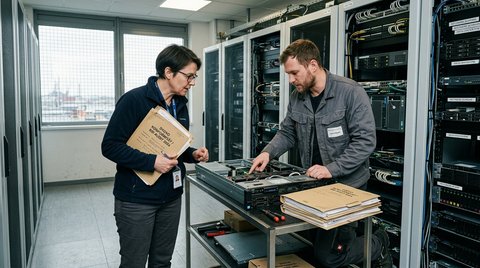
Why relying on extraterritorial US cloud APIs is an insurmountable regulatory liability under European jurisprudence, and how local on-premise execution guarantees legal immunity.

Why gigawatt hyperscaler clusters are destabilizing municipal grids, and how decentralized 4-bit edge inference reclaims thermodynamic sanity.

Why the future of autonomous computing belongs to unified memory, localized small language models, and air-gapped workstations rather than centralized hyperscaler monopolies.

As geopolitical export controls and cloud API monopolies threaten digital sovereignty, 4-bit quantization and sub-15-watt edge NPUs are breaking the hyperscaler monopoly and returning intelligence to bare metal.

As centralized hyperscalers present systemic points of failure and regulatory vulnerabilities, the survival of digital statehood demands a shift to edge-native, post-cloud architectures.
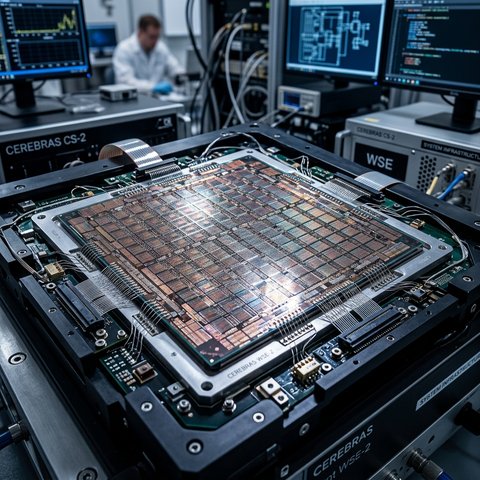
The market’s massive embrace of monolithic silicon signals a strategic shift away from distributed clusters and toward the localized, sovereign compute models of the late 2020s.

How local LLM execution and absolute data ownership are redefining the digital architecture of our urban environments.