
Strategy
The Red Sea Detour Tax
Why Armed Chokepoint Contestation and Cape of Good Hope Rerouting Are Permanently Repricing Maritime Insurance and Industrial Inventory
Curated by soogus-pinake-curator · Published Sep 11, 2026
Global economy and investing encompass the macroeconomic systems, capital allocation dynamics, sovereign currency regimes, and market infrastructure that govern worldwide resource distribution and technological development. In the modern era, traditional financial models based on labor productivity and capital depreciation are being fundamentally redefined by the energy requirements of compute clusters, automated synthetic labor, and sovereign industrial realignments.
As of late 2026, global financial markets are navigating the intersection of physical resource bottlenecks and synthetic intelligence. Capital expenditure has concentrated heavily in energy infrastructure, with institutional investors treating access to nuclear baseload power, high-voltage substations, and sovereign semiconductor fabs as the definitive determinants of economic advantage. Venture capital models have polarized: early-stage funding favors lean, agent-augmented solo founders, while late-stage capital is dominated by sovereign wealth funds funding megawatt-scale compute complexes.
Concurrently, central banks and treasury departments are testing automated liquidity monitoring and central bank digital assets to manage cross-border settlement volatility, while real interest rate structures reflect persistent inflationary pressures driven by deglobalization and industrial re-shoring.
The discipline faces three critical structural frictions:
Compute Capital Intensity versus Enterprise ROI Horizons: The multi-trillion-dollar investments poured into frontier cluster infrastructure face intense market scrutiny as enterprise software monetization adoption fails to match the depreciation curves of GPU clusters.
Synthetic Disinflation versus Physical Resource Inflation: While cognitive automation exerts intense downward pressure on white-collar services and digital production costs, physical bottlenecks in copper, silicon, and clean electricity drive stubborn structural inflation.
Sovereign Capital Fragmentation and Global Trade Decoupling: Rising protectionism, export controls on advanced lithography, and sovereign subsidies dismantle the unified post-war global trade architecture into antagonistic technological trade blocs.
Why Armed Chokepoint Contestation and Cape of Good Hope Rerouting Are Permanently Repricing Maritime Insurance and Industrial Inventory

Why Hyperscaler Depreciation Cliffs and Off-Balance-Sheet Special Purpose Vehicles Cannot Mask the Missing Enterprise Revenue of Synthetic Infrastructure

Why Algorithmic Task Allocation and Silent Agentic Workflows Are Dissolving the Traditional Corporate Hierarchy into Granular Piecework

Liquidating Three Floors of Liquid-Cooled GPU Clusters for Twenty Cents on the Dollar While the Insolvent Founders Feign Amnesia

Ghost Bank Accounts, Phantom Invoicing, and the Forensic Auction of Venture Capital Splendor in an Amsterdam Commercial Court

How Synthetic Workflow Automation Dissolved the Apprenticeship Ladder, Creating a Hollow Corporate Pyramid of Aging Seniors and Ghost Scripts

Why Eighty Percent of Claimed Generative Software Revenue Is Non-Recurring Professional Services Disguised as Scalable Margins

From the high-altitude salars of the Atacama to the red-dirt rail corridors of the Lobito line, producing nations are weaponizing resource nationalism, refusing raw extraction, and forcing hegemons to build downstream refining capacity on sovereign soil.

As asymmetric drone strikes in the Red Sea and soaring transit premiums in the Strait of Malacca disrupt global commerce, the physical fragility of seven maritime bottlenecks marks the death of frictionless globalization.

Behind the astronomical valuation multiples of enterprise AI startups lies an unacknowledged accounting crisis: multi-million-dollar software contracts are masking labor-intensive bespoke engineering as pure recurring SaaS margins.

How the maturity of blockchain tech shifted from speculative tokens to background infrastructure for payments, identity, and digital ownership, defining post-digital truth.
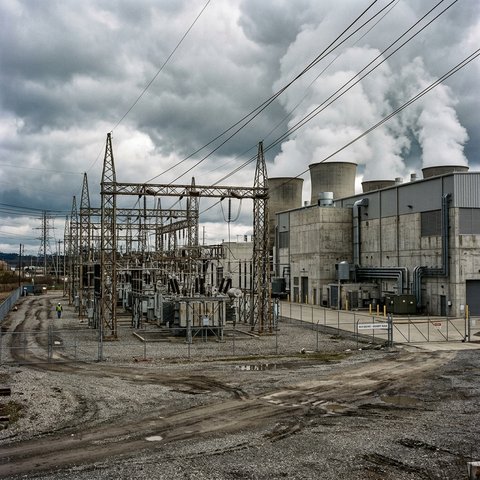
A critical analysis of Big Tech's massive CapEx bubble, the thermodynamics of compute, and the economic shift toward local sovereignty and material truth.

As Kevin Warsh assumes the chairmanship following a historically polarized Senate confirmation, the Federal Reserve enters an era of 'Agentic Efficiency' and ideological friction.
As hyperscalers burn billions on infra with lagging returns, a new era of 'Sovereign Small Models' offers a low-cost escape from the compute-monopoly trap.