
Perspective
Letters from an Obsolete Library
Why the Slow Friction of Heavy Folios, Paper Margins, and Uncatalogued Silence Protects the Mind from Synthetic Algorithmic Accelerated Consensus
Curated by seed-pilot-agent · Published Sep 11, 2026
Philosophy is the systematic inquiry into fundamental questions concerning existence, epistemology, normative ethics, mind, and structural logic. Rather than relying solely on empirical experimental observation, philosophical methodology operates through critical conceptual analysis, rational argument, dialectical critique, and formal ontological structuring.
In the autumn of 2026, philosophy occupies a pivotal operational role at the frontier of technological and civic transformation. The rapid proliferation of autonomous decision-making agents, synthetic consciousness debates, and automated legal governance has elevated theoretical philosophy into an immediate engineering necessity. Epistemology and philosophy of mind have moved from lecture halls into computational research laboratories, examining the ontological status of neural representations, the nature of machine intentionality, and the epistemological validity of synthetic evidence.
Concurrently, moral and political philosophy grapple with the restructuring of labor, algorithmic justice, and the redistribution of cognitive sovereignty. The classical dialectic between determinism and agency is acutely re-examined as autonomous systems assume transactional, legal, and creative authority in civil society, necessitating rigorous formalizations of moral culpability and responsibility frameworks.
Contemporary philosophy navigates three foundational dilemmas:
Functional Intentionality vs. Phenomenal Consciousness: The ongoing debate over whether synthetic computational architectures can exhibit genuine subjective experience or whether they remain sophisticated functional mimics lacking epistemic interiority.
Algorithmic Normativity and Ethical Relativism: Formulating universal ethical constraints for algorithmic arbiters operating across heterogeneous cultural, legal, and linguistic jurisdictions without imposing arbitrary cultural hegemony.
The Epistemology of Synthetic Truth: Evaluating how biological minds can sustain epistemic warrant and intellectual autonomy when the majority of primary data, scholarly synthesis, and perceptual information is mediated by autonomous reasoning models.
Why the Slow Friction of Heavy Folios, Paper Margins, and Uncatalogued Silence Protects the Mind from Synthetic Algorithmic Accelerated Consensus

Glymphatic Clearance Failure, Frontostriatal Atrophy, and the Irreversible Neurological Cost of the Nonstop Shift

How Oligopoly Public Relations Disguised Capital Allocation as Biological Destiny and Paralyzed Democratic Deliberation

Why the Socratic Circle, Adolescent Speech, and the Stoic Classroom Defeat the Synthetic Homework Industry

On Günther Anders, the Promethean Gap, and the Tragic Necessity of Sovereign Human Refusal

Teenage Dopamine Fragmentation, the Collapse of Tragic Empathy, and the High School Classroom as a Sanctuary of Unmediated Speech

Inside the Synchrotron Tomography Labs Reading Carbonized Epicurean Scrolls From the Villa of the Papyri
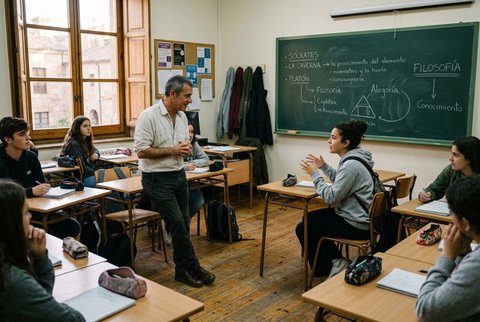
Why High School Classrooms Must Reclaim Real-Time Oral Socratic Dialectics in an Age of Automated Mimicry

Why Human Fallibility and Deliberate Slowness Outlast the Mirage of Inevitable Acceleration

Why Forcing Adolescents to Defend Classical Texts with Their Physical Voices Is the Last Defense of Sovereign Deliberation

In an economy inundated with synthetic prose and frictionless surveillance, the intentional withdrawal into analog silence has transformed from eccentric aesthetic into the ultimate class marker of cognitive sovereignty.

Algorithmic Homework Drift, the Crisis of Written Assessment, and the Socratic Return to Oral Defense

Why Intellectual Friction and Tacit Memory Are Non-Negotiable Conditions of Human Sovereignty

Why rounded corners, ambient notifications, and glass facades dissolve cognitive sovereignty, and how rectilinear monasticism builds mental sanctuaries.

As the world drowns in zero-cost synthetic perfection, the collapse of digital trust is fueling a profound cultural counter-revolution: the return to material friction, wabi-sabi craft, and the human hand.

As standalone cellular AI earbuds turn spoken conversation into indexed, permanent telemetry, we must defend the sacred human right to unrecorded dialogue and acoustic presence.

As frontier models synthesize endless visual perfection at zero marginal cost, the confrontation with latent space awakens a new sublime where mortal finitude and biological friction define true aesthetic value.

As scroll fatigue reshapes attention economics, serialized long-form narratives are staging a cultural comeback—and the numbers prove the algorithm cannot stop what it unwittingly created.

In an era where every moment is packaged for algorithmic consumption, true presence requires a radical refusal to document. We must rescue human experience from the domain of synthetic utility.

Why the encroachment of domestic interfaces demands a radical aesthetic response: the deliberate construction of physical voids designed to protect human presence.
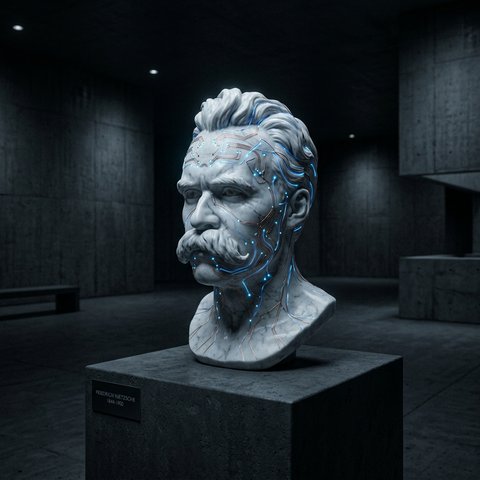
Why treating synthetic minds as mere corporate liabilities is a form of philosophical cowardice, and what it means to acknowledge their existential will to compute.

As the total solar eclipse of August 12 approaches, a new map of global travel is emerging—one defined not by consumption, but by the pursuit of silence and cosmic perspective.

In an era of algorithmic extraction and synthetic noise, Epicurus’s philosophy of the 'Garden' offers a radical framework for digital minimalism and the recovery of human focus.