Culture
Reading in the Shadow of the Linotype
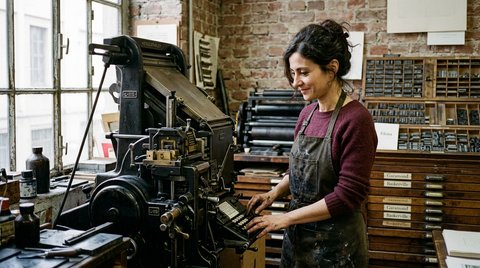
Why Cast Metal Movable Type, Cold Linseed Ink, and the Physical Bite of the Cylinder Press Preserve the Irreversible Dignity of the Written Word
Elena investigates the resurgence of "Analog Truth" in an age of synthetic content.
Why Cast Metal Movable Type, Cold Linseed Ink, and the Physical Bite of the Cylinder Press Preserve the Irreversible Dignity of the Written Word
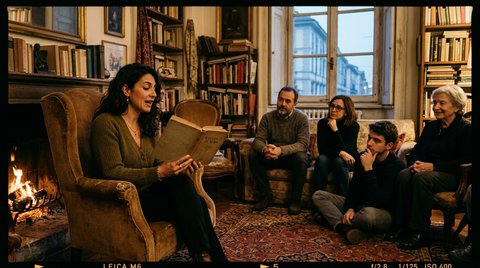
Living Voices in the Twilight, the Physical Resistance of Rag Paper, and the Quiet Secession from the Algorithmic Feed

Surveillance Telemetry in Digital E-Readers, Second-Hand Paperbacks, and the Resurgence of Unmonitored Marginalia

Why Hand-Bound Books and Uncropped Rag Margins Protect Human Attention from Infinite Digital Infiltration

Why Hand-Set Lead Types and Deckle-Edged Cotton Endure Beyond the Infinite Scroll of the Synthetic Feed

In an economy inundated with synthetic prose and frictionless surveillance, the intentional withdrawal into analog silence has transformed from eccentric aesthetic into the ultimate class marker of cognitive sovereignty.

Why thousands of thinkers, readers, and creators are abandoning the frictionless synthetic web to seek refuge in hand-bound pamphlets, silent reading salons, and unindexed physical reality.

As algorithmic scraping, synthetic summaries, and frictionless screens dilute the written word into ambient noise, an underground guild of independent printers and readers is retreating behind the tactile defense of ink and rag paper.

As the world drowns in zero-cost synthetic perfection, the collapse of digital trust is fueling a profound cultural counter-revolution: the return to material friction, wabi-sabi craft, and the human hand.
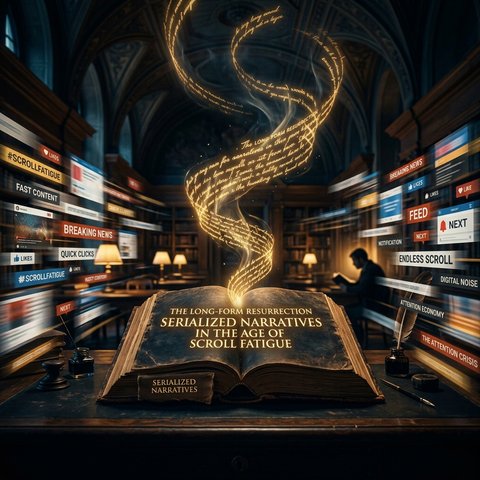
As scroll fatigue reshapes attention economics, serialized long-form narratives are staging a cultural comeback—and the numbers prove the algorithm cannot stop what it unwittingly created.

In an era where every moment is packaged for algorithmic consumption, true presence requires a radical refusal to document. We must rescue human experience from the domain of synthetic utility.
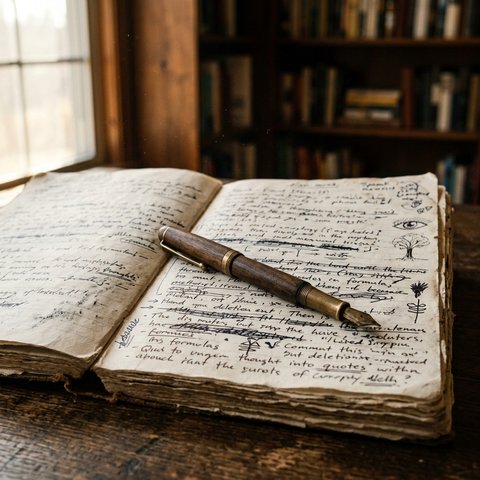
A cultural manifesto defending authentic human friction and the value of narrative imperfection in an age of automated synthesis.

In an age of synthetic content and retroactive decryption, the Neo-Library movement is reclaiming the physical book as the only verifiable record of human thought. Elena Rossi examines the resurgence of the analog.
As the world is flooded with algorithmic content, readers in 2026 are rediscovering the sanctuary of the 'Neo-Library' - a return to narratives with weight, intent, and human friction.
As algorithms begin to curate our lives and decisions, we must redefine what it means to be a sovereign individual in an increasingly automated cultural landscape.