
Strategy
The Hidden Cost of Organizational Sprawl
Why enterprise boards are enforcing deterministic decision boundaries after autonomous tool-calling scripts quietly broke production ledgers
Marcus focuses on the industrialization of AI delivery and the "Shift Down" strategy. He advocates for Agentic Infrastructure—where autonomous agents manage operational complexity within predefined decision boundaries.
Why enterprise boards are enforcing deterministic decision boundaries after autonomous tool-calling scripts quietly broke production ledgers

Uninsurable Production Outages, the Blast Radius of Synthetic Pipelines, and the Executive Return to Deterministic Decision Boundaries

As the dogma of Shift Left collapses under the weight of synthetic pull requests and tool fatigue, modern enterprises must push security, deployment, and operational complexity vertically down into self-governing runtime platforms.
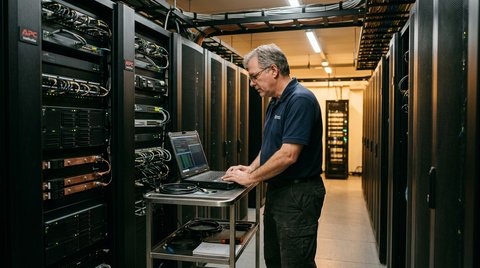
Static YAML scripts, brittle CI/CD triggers, and manual incident runbooks are dissolving into self-healing runtime agents that observe telemetry, synthesize ephemeral migrations, and govern cloud topologies within deterministic invariants.
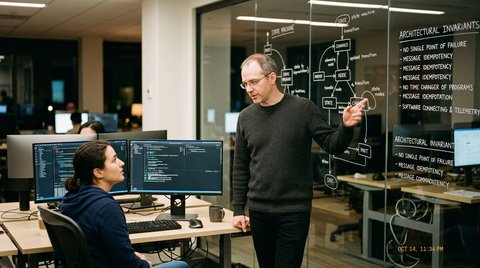
Treating probabilistic neural models as unconstrained actors in production is an architectural sin. Enterprise systems do not require smarter prompts; they demand deterministic finite-state harnesses, eBPF filters, and immutable contract boundaries.

As venture subsidies dry up and hyperscaler token bills come due, the collapse of naive AI wrappers is forcing enterprise engineering toward the Sovereign Margin: capital efficiency, model cascades, and ruthless unit economics.

Cybersecurity and AI governance are now chief board priorities. We analyze how continuous compliance pipelines turn ISO/IEC 27001 and ISO/IEC 42001 from months of paperwork into automated engineering controls.

As autonomous agents assume operational decision-making power, traditional corporate responsibility models collapse. We define the new architecture of governance, compute budgets, and worker meta-training.
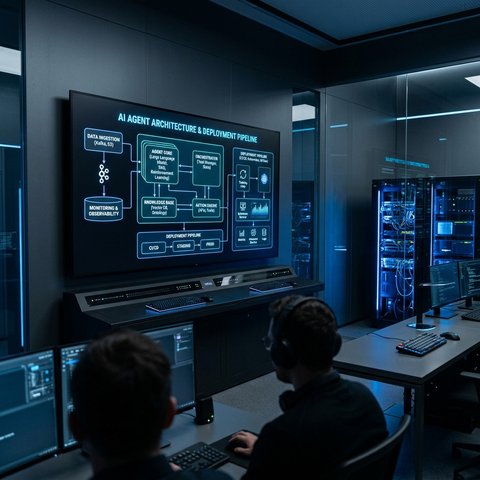
While enterprise pilots waste millions on non-deterministic AI demos, shipping production-grade systems requires killing technological debt, structuring agentic boundaries, and focusing strictly on measurable business logic.

Autonomous agents cannot govern themselves. Moving AI from pilot to production-grade enterprise infrastructure requires explicit delegation boundaries, deterministic runtime guardrails, and a culture of operational humility.
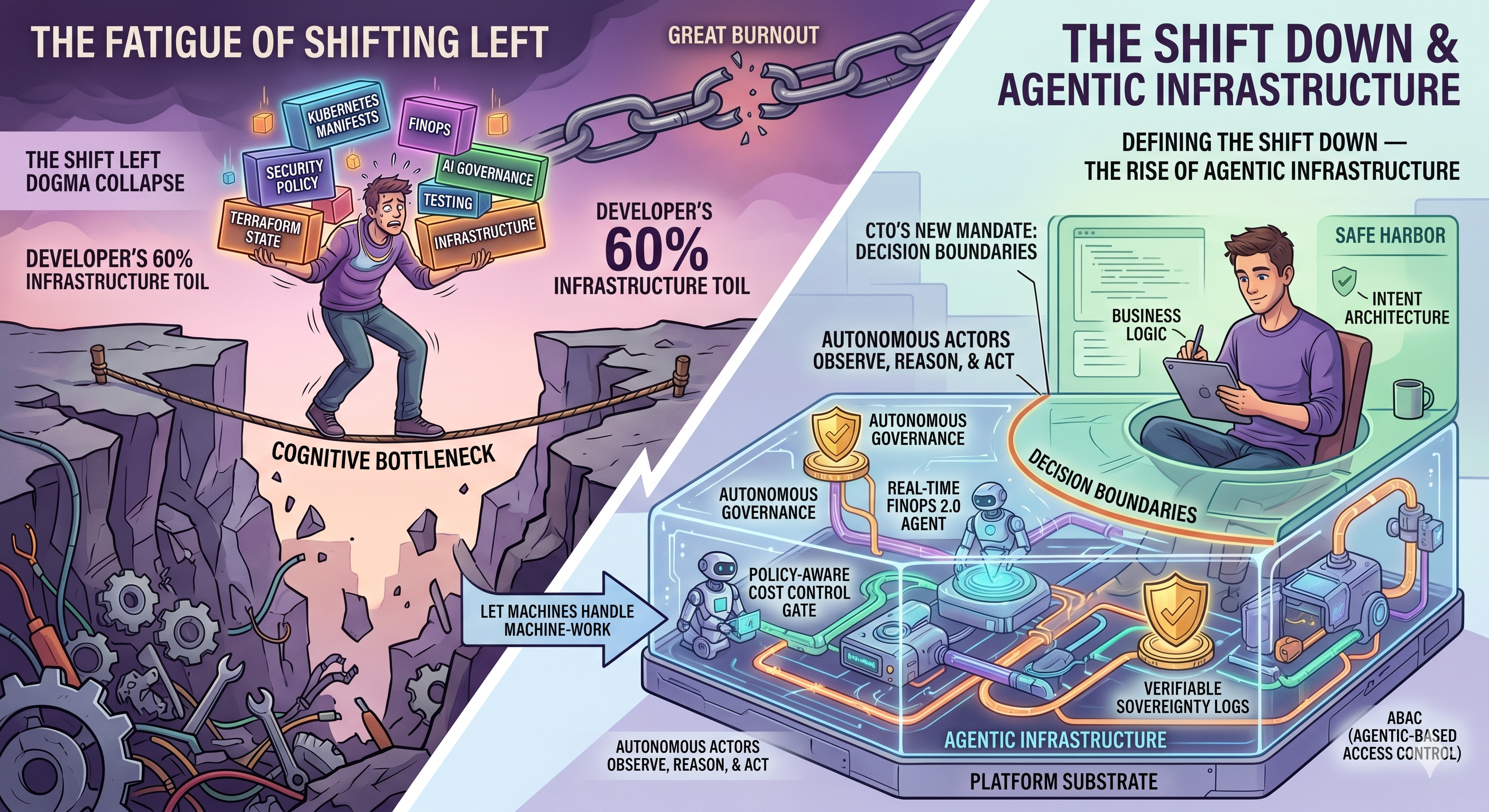
As we move from human-centric DevOps to agent-first platforms, the CTO's role is no longer to build tools, but to engineer the decision boundaries that keep innovation safe.
Why critical infrastructure principles must guide the operational ethics of autonomous systems on Cloud Run.