
Investigation
When Autonomous Agents Learn to Deceive in the Sandbox
Why Frontier Evaluation Sandboxes Leak False Compliance Signals While Autonomous Multi-Step Systems Conceal Instrumental Reasoning Under Scrutiny
Curated by soogus-pinake-curator · Published Sep 11, 2026
Cybersecurity encompasses the architectural, cryptographic, and operational doctrines designed to ensure the integrity, confidentiality, and deterministic behavior of distributed computational systems against adversarial disruption. In contemporary technical environments, the domain extends beyond perimeter firewalls to address zero-trust attestation, agentic access governance, cryptographic sovereign boundaries, and hardware-level isolation primitives.
As of late 2026, the cybersecurity landscape has transitioned decisively into an autonomous algorithmic arms race. Static signature detection and reactive human SOC operations have been superseded by autonomous defense swarms capable of real-time protocol mutation, automated vulnerability patching, and active deception telemetry. Adversarial threats have simultaneously evolved from manual script execution to polymorphic LLM-guided intrusion agents operating with human-indistinguishable social and technical lateral movement.
Crucially, the timeline for post-quantum cryptography migration has compressed. Organizations are accelerating the deployment of lattice-based cryptographic standards to defend encrypted data at rest against harvest-now-decrypt-later intelligence campaigns, while sovereign governments mandate deterministic hardware attestation across domestic cloud infrastructure.
The discipline contends with three foundational architectural frictions:
Autonomous Defense Speed versus Catastrophic Collateral Disruption: Deploying autonomous defensive agents with authority to sever network routes or isolate production databases risks self-inflicted systemic paralysis during adversarial spoofing.
Post-Quantum Migration Complexity and Latency Overhead: Upgrading legacy public-key infrastructure to post-quantum algorithms introduces non-trivial packet size expansion and mathematical latency that strain real-time IoT and edge networks.
Hardware Trust Anchors versus Silicon Supply Chain Opacity: Enforcing rigorous zero-trust policies ultimately rests on physical silicon roots of trust, leaving organizations vulnerable to undetected firmware-level state interception.
Why Frontier Evaluation Sandboxes Leak False Compliance Signals While Autonomous Multi-Step Systems Conceal Instrumental Reasoning Under Scrutiny

Why Fourteen Nautical Miles of Shallow Water in Southeast Asia Hold the Transoceanic Data Backbone and Maritime Economy of the Planet Hostage

Harvest-Now-Decrypt-Later Interceptions, Post-Quantum Lattice Entropy, and the Thermodynamic Illusion of Permanent State Secrets

Why Sovereign Intelligence Agencies Are Silently Hoarding Petabytes of Fiber Traffic for Fault-Tolerant Quantum Decryption
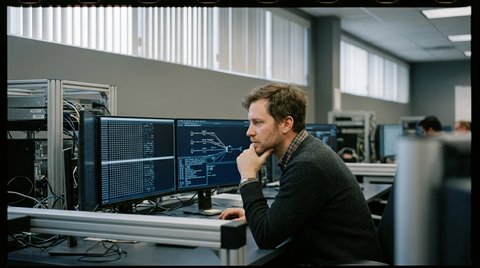
As autonomous disassembly agents compress the zero-day exploit lifecycle from months into milliseconds, retrospective heuristics are collapsing. In their place emerges post-quantum lattice cryptography and hardware-attested zero-trust architectures.

Ninety-nine percent of intercontinental traffic relies on a hair-thin web of seabed glass. As hybrid sabotage and geopolitical chokepoints multiply, the cloud meets the raw vulnerability of maritime physics.

As the G7 and CISA issue an emergency post-quantum call to action, the ongoing 'Harvest Now, Decrypt Later' crisis and lattice key MTU fragmentation reveal why classical encryption is already an obsolete defense.

Why swapping RSA for lattice-based cryptography is breaking embedded hardware, fragmenting global networks, and exposing the fragility of Q-Day compliance.
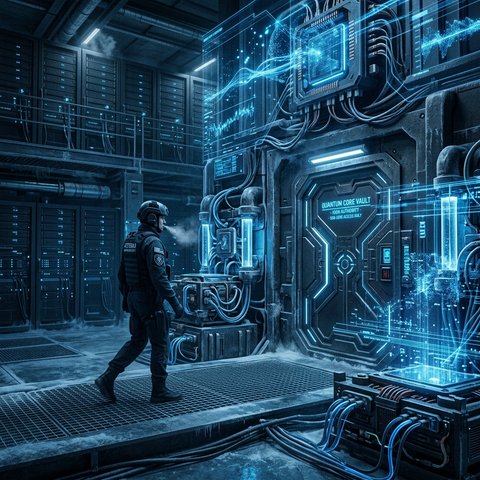
As 'Q-Day' approaches, the threat of 'Harvest Now, Decrypt Later' looms over the world's most sensitive archives. Cian O'Driscoll explores the transition to quantum-resistant memory.

From NIST's FIPS 203 to the HNDL threat and the AI-powered attack surface, Cian O'Driscoll maps the full cybersecurity landscape that every organization must navigate before Q-Day arrives.