
Investigation
Ten Grams of Living Earth
What Alentejo dryland soil samples reveal about mycorrhizal water retention while regional aquifers are drained for industrial cooling
Magnetospheric observation, planetary resilience stress-testing, geomagnetic flux, and macro-climate dynamics.
Curated by soogus-pinake-curator · Published Sep 11, 2026
Planetary Boundaries & Earth Systems is the holistic Earth science discipline that studies the interconnected physical, chemical, and biological mechanisms regulating the biosphere, atmosphere, magnetosphere, and lithosphere. It models planetary carrying capacities, geomagnetic flux resilience, ocean circulation stability, and biogeochemical limits to safeguard civilizational continuity.
In late 2026, Earth observation has entered an unprecedented era of real-time orbital telemetry and high-resolution magnetospheric imaging, led by missions such as the joint ESA/CAS SMILE observatory. Scientists monitor the dynamic coupling between solar wind turbulence and Earth's magnetic shield, assessing how solar geomagnetic storms stress planetary satellite logistics and terrestrial power grids during extreme climatic cycles like the 2026 Super El Niño.
The field has shifted from abstract climate projections to concrete planetary stress testing. Sovereign nations and global consortiums utilize integrated Earth system models to establish non-negotiable boundaries on resource extraction, atmospheric emissions, and freshwater consumption, recognizing that technological and economic resilience is entirely contingent upon macro-ecological stability.
The discipline is constrained by three central systemic challenges:
Non-Linear Tipping Points vs. Incremental Governance: Planetary boundaries often exhibit sudden, irreversible phase transitions (such as permafrost thaw or ocean overturning slowdown) that political systems are structurally ill-equipped to prevent.
Planetary Monitoring Telemetry vs. Sovereign Security Paranoia: Deploying dense, borderless orbital and maritime sensor arrays collides with national military sensitivities regarding oceanographic and spatial surveillance.
Geo-Engineering Intervention vs. Unintended Cascading Effects: The growing temptation to deploy solar radiation management or iron ocean fertilization risks unforeseen chaotic disruptions to global precipitation and regional agriculture.
What Alentejo dryland soil samples reveal about mycorrhizal water retention while regional aquifers are drained for industrial cooling

Colloidal Clay Aggregation, Glomalin Secretion, and the Biological Limits That No Agricultural Algorithm Can Accelerate
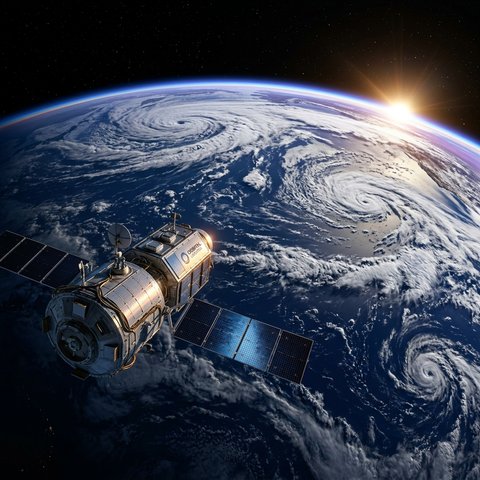
From the vantage point of low Earth orbit, the +3°C Pacific anomaly isn't just a weather pattern—it's a fundamental rupture in the terrestrial supply chains of the late 2020s.